

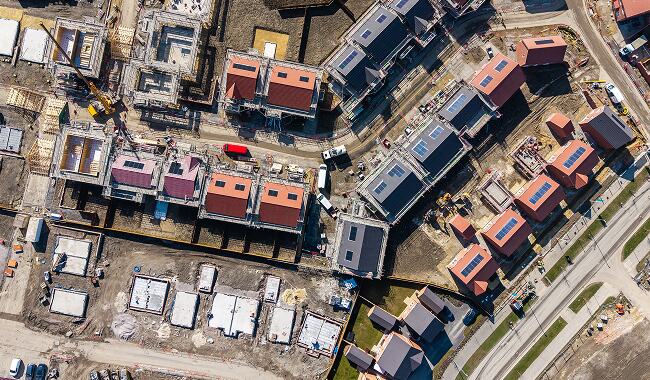
Running one construction site is complex enough. Running several at the same time multiplies that complexity, commercially, legally and financially.
Across the UK, many contractors and developers now operate multiple live projects simultaneously. Regional housing schemes, phased developments, refurbishment contracts and specialist trade work often overlap. While this supports growth, it also increases exposure to risk. More sites mean more employees, more subcontractors, more equipment in transit and greater contractual responsibility.
At the same time, construction costs remain volatile, weather-related claims are rising, and regulatory scrutiny continues to tighten. In this environment, insurance is no longer a simple compliance exercise. It is a core part of risk management and business stability.
This guide explains what multi-site construction insurance is, who needs it, and how to structure cover effectively to protect your business as it scales.
What Is Multi-Site Construction Insurance?
Multi-site construction insurance is a structured insurance approach designed for businesses operating across more than one active site at the same time. Rather than arranging separate policies for each project, it allows contractors and developers to manage risk under a coordinated insurance programme.
In simple terms, it brings multiple locations under one strategic umbrella.
For a growing construction firm, this might mean covering five housing sites across different counties. For a regional contractor, it could involve simultaneous commercial refurbishments, groundwork projects and phased developments. Instead of treating each site as a standalone risk, multi-site construction insurance recognises the reality of how modern construction businesses operate.
It is important to understand that this is not always a single, off-the-shelf product. More often, it is a carefully structured combination of policies, such as Contractors All Risks, Public Liability and Plant Insurance, aligned to protect the business as a whole.
As construction firms expand, risk multiplies. More sites mean more people, more equipment, more contracts and more exposure. A well-planned multi-site insurance structure ensures that growth does not create hidden gaps in cover.
For businesses managing several live projects, insurance should not be reactive. It should be designed to support scale, stability and long-term success.
Who Needs Multi-Site Construction Insurance?
Multi-site construction insurance is designed for businesses that operate across several active projects at the same time. If your company has moved beyond a single-site model, your risk profile has changed, and your insurance structure should reflect that.
Below are the types of construction businesses that typically require a multi-site approach.
Growing Construction Firms
Many small and medium-sized builders begin with one or two projects at a time. As reputation and demand increase, so does workload. It is common for firms to progress from a handful of domestic projects to managing five, ten or more live sites across different locations.
At this stage, separate policies arranged per project can become inefficient and inconsistent. Cover limits may vary, renewal dates can be misaligned, and administrative oversight increases. A coordinated insurance structure ensures protection scales with the business.
Developers Managing Phased Projects
Property developers delivering phased residential or mixed-use schemes often run overlapping stages of construction. Groundworks may be underway on one phase while superstructure work begins on another.
Each phase carries risk, but the development as a whole represents a larger financial exposure. Multi-site insurance planning ensures that material damage, liability and contractual risks are aligned with the total project value, not just individual plots.
Contractors with Regional Operations
Contractors working across multiple counties or regions face additional complexity. Plant and machinery may move between sites, subcontractors may vary by location, and local environmental risks can differ significantly.
Without a coordinated insurance structure, it is easy for gaps in cover to appear, particularly around plant movement, liability limits or site-specific conditions.
Specialist Trades with Multiple Active Contracts
Groundworkers, roofing contractors, mechanical and electrical specialists and other trades frequently operate across several sites simultaneously. Even if they are not the principal contractor, their exposure to liability and equipment loss increases as workload expands.
More contracts mean more potential claims. Multi-site insurance helps ensure that cover limits are sufficient to reflect total annual turnover and cumulative risk, rather than viewing each job in isolation.
The Core Risks of Running Multiple Construction Sites

Operating multiple construction sites increases a construction firm’s overall exposure to risk. More sites mean more employees, subcontractors, deliveries and members of the public interacting with your operations, raising the likelihood of injury claims, property damage or third-party incidents. Even one serious claim can affect the wider business, not just the site where it occurs.
The movement of plant, machinery and tools between locations adds another layer of risk. Equipment in transit or temporarily stored may be inadequately covered, and theft or accidental damage remains common.
Maintaining consistent health and safety standards across sites can also be challenging, with variations in management and subcontractor practices increasing the chance of accidents or regulatory issues.
Environmental factors and regional differences in weather further complicate matters, with flooding, high winds or ground instability affecting some sites more than others. Combined with overlapping contracts and rising turnover, these risks make structured multi-site insurance essential to protect both projects and the business as a whole.
Key Insurance Covers for Multi-Site Construction Businesses
Contractors All Risks (CAR)
Contractors All Risks insurance is central for multi-site businesses. It protects buildings, materials and works across all active sites, covering accidental damage or loss during construction. This ensures that an incident on one site does not leave other projects exposed.
Public and Employers’ Liability
Public and Employers’ Liability insurance covers injury to employees, subcontractors and members of the public. With larger workforces operating across multiple sites, adequate liability cover helps protect the business’s reputation and ensures claims are managed efficiently.
Plant and Machinery Insurance
Plant and machinery insurance provides protection for tools and equipment on-site, in transit or in temporary storage. It reduces the financial impact of theft, loss or accidental damage, which is especially important when machinery moves between multiple projects.
Business Interruption Insurance
Business Interruption insurance safeguards against lost income caused by fire, flood or other significant damage. This is particularly relevant when delays on one project can affect cash flow across other sites.
Professional Indemnity
Professional Indemnity insurance is important for contractors offering design-and-build services. It covers claims arising from design errors, consultancy mistakes or professional negligence.
Environmental and Pollution Liability
Environmental and Pollution Liability insurance protects against site contamination or pollution incidents. With increasing regulatory scrutiny in the UK, this cover is essential to manage environmental risk and ensure compliance.
This combination of covers provides a robust framework, helping multi-site construction businesses manage risk effectively while supporting safe growth.
Strategic Insurance Planning for Multi-Site Construction Businesses
For businesses operating across multiple sites, insurance should be treated as a strategic tool rather than a simple compliance requirement. A coordinated approach ensures consistent protection, reduces gaps in cover, and can offer cost efficiencies.
Start by reviewing all existing policies and assessing total exposure across every active site. Consider the movement of plant, tools and materials, as well as variations in local environmental and contractual risks. Align policy limits with total turnover and project values rather than individual sites to avoid under-insurance.
Centralising renewal dates and consolidating policies where possible simplifies administration and ensures no site is inadvertently left uncovered. Engaging a specialist broker with experience in multi-site construction can help identify gaps, recommend appropriate cover, and support ongoing adjustments as your business grows.
By structuring insurance strategically, multi-site construction firms can protect assets, manage risk consistently, and build a stable foundation for future expansion.
Common Insurance Mistakes Multi-Site Builders Make
Even experienced construction businesses can make costly mistakes when arranging multi-site insurance. One common error is underestimating total exposure by treating each site separately rather than considering cumulative risk. This can lead to insufficient liability limits or gaps in coverage for plant and equipment.
Another frequent mistake is assuming standard policies automatically cover equipment in transit or temporary storage, which can leave valuable machinery unprotected. Failing to review and update insurance regularly is also risky, particularly as project values, workforce size, or turnover increase.
Overlapping or duplicate policies can be another hidden cost, resulting in unnecessary premiums without additional protection. Similarly, ignoring regulatory changes or local site-specific risks can leave the business vulnerable to fines, claims or project delays.
Avoiding these pitfalls requires careful planning, regular policy audits, and engagement with a broker experienced in multi-site construction insurance.
Construction Insurance Trends in 2026

In 2026, multi-site construction businesses face rising insurance costs due to material inflation and increased claims from extreme weather events. Climate-related risks, such as flooding and high winds, are influencing premiums and coverage requirements.
Regulatory scrutiny continues to grow following post-Building Safety Act reforms, making compliance documentation and risk management more critical than ever. Insurers are increasingly looking for evidence of consistent health and safety practices across all sites before offering cover.
Digital tools and risk management software are becoming standard, helping businesses monitor exposures, track plant and equipment, and demonstrate proactive risk control, which can improve pricing and claims handling.
Insurance as a Growth Strategy
Multi-site construction insurance is more than a compliance requirement, it is a vital tool for protecting projects, assets and the long-term stability of your business. By planning strategically, aligning cover across all sites, and addressing key risks proactively, you can minimise gaps, manage costs, and operate with confidence as your business grows.
Working with an experienced broker or insurance partner ensures your policies remain up to date, tailored to your operations, and aligned with regulatory requirements. Contact us today to review your multi-site insurance strategy and secure the protection your business needs to grow safely and successfully.