


There’s nothing worse than coming home to see your neighbour’s builder has damaged your property. It’s even worse if your neighbour isn’t taking responsibility.
But what can you do?
You could take various options depending on the damage caused, amongst other factors. We’ll show you how to get your neighbour to pay for the damage.
What to do if my neighbour breaks something on my property
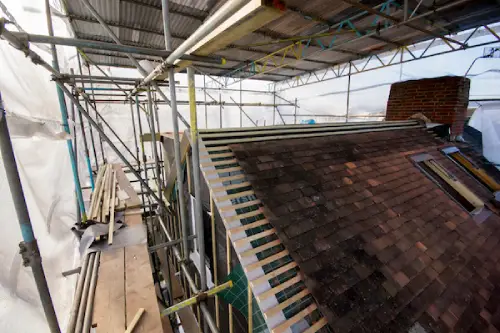
What you should do will depend on what damage was done to your property. If it was intentional, the incident could count as a criminal offence. Calling the police should be your first course of action in this case. If your neighbour is a renter, contact the landlord or building owner.
You can try talking to your neighbour directly, but only if it’s safe for you to do so.
If the damage appears to be an accident, you could approach the situation in a few ways. The best way would be to find an amicable solution. Walk over to your neighbour’s property and see if the owner is open to paying for the repairs.
It’s possible that your neighbour would refuse to pay or even deny that the accidental damage is their fault. You can submit a claim to your insurance company if you have home insurance.
Contact your insurance provider to see how it can help you settle the issue and pay for repairs. You’ll have to provide details and evidence to substantiate your claim. So take photos or videos of the damage done to your property. Documenting your exchanges with your neighbour will also help prove that you did your best to settle things amicably.
You should only take legal action as a last resort. Going to court could cost you more than if you were to pay for the repairs yourself.
I can’t prove my neighbour damaged my property. What should I do?
For your home insurance policy to kick in, you will have to prove that the damage caused to your property truly is your neighbour’s fault.
If your neighbour damages your property but can’t find any proof, you can still submit a claim. However, know there’s a good chance of your claim getting rejected if you can’t show evidence that your neighbour is responsible for the damage.
This leaves you with fewer options.
If your neighbour sounds reasonable, they could be open to paying for the repair. See if the damage was caused by poor workmanship by a contractor they hired. If it was the one responsible, the contractor might be liable and should shoulder the repair costs.
There shouldn’t be a problem if your neighbour or contractor got renovation insurance or all-risk insurance.
Consider having a local authority with you when you chat at your neighbour’s property. That person can act as a witness should the situation get messier from here on out.
You can always seek legal advice if the situation becomes more complicated.
What if my neighbour can’t or doesn’t pay for the damages even though it’s their fault?

If your neighbour is taking responsibility for the damage but can’t pay for the cost of repairs, their public liability insurance will cover the costs.
If they don’t have one, you can consider going into mediation. This process is where an unbiased mediator sits with both parties to find a compromise.
A mediator can be someone specialising in boundary disputes or a solicitor familiar with property law. If damage occurs to any property, like a broken window, this person should be able to figure out who has to cover the cost of fixing it.
One advantage of using mediation to settle a dispute is that it’s less stressful for the homeowner. In addition, it’s cheaper than going through litigation. And because discussions can be done privately, your community won’t likely hear about it — saving you and your neighbour from gossip.
Decisions made through mediation are considered final. It should be noted that using meditation services isn’t free, but it’s cheaper than taking legal action. If you’re in England or Wales, you can use the Civil Mediation Council, while those in Scotland can use Scottish Mediation.
But what if your neighbour won’t accept responsibility? What if you can prove that this isn’t the first time your house was damaged by builders they hired? Or what if the adjoining owner violates your party wall agreement but refuses to deal with the damage? What are your options, then?
At that point, you may have to go to court. As mentioned earlier, this is probably the last course of action you’ll want to take, as it can get expensive. But if the damage is done to your property is too great, and your neighbour isn’t showing any signs of cooperating, you might need to go this route.
In addition to solicitor charges, you’ll have to set aside some money for court fees, barrister fees, and expert witnesses, depending on the severity or nature of the damage.
How can you prevent further property damage from a neighbour in the future?
If you’ve used mediation to settle your dispute, you can use the opportunity to set up ground rules for future incidents, should there be any. This moment could also remind you to go around your property to spot potential causes for damage.
For example: If a tree from your neighbours’ property starts hanging over your roof, it might be time to chat with them about taking preventive measures.
Seek advice from professional builders on protecting your house from property damage. Every property is different. There could be unique solutions you could implement to save you from dealing with this ever again. You can set up protective barriers.
If a neighbour is doing work on their home, make sure that their builders are nowhere near your house, if that’s possible.
Consider installing security cameras around your property. You can use the footage as evidence when you file claims from insurers or against your neighbours should they deny liability for their negligence should something similar happens again.
Best Course of Action
The best course of action is to settle disputes amicably. Not only will this be cheaper for your neighbour but for you as well. If confronting your neighbour doesn’t go according to plan, that’s when you file a claim with your insurance company.
Should insurers refuse to pay for the damage for whatever reason, you might have to go to court — that is if your neighbour refuses to fix the damage or pay for repairs.