
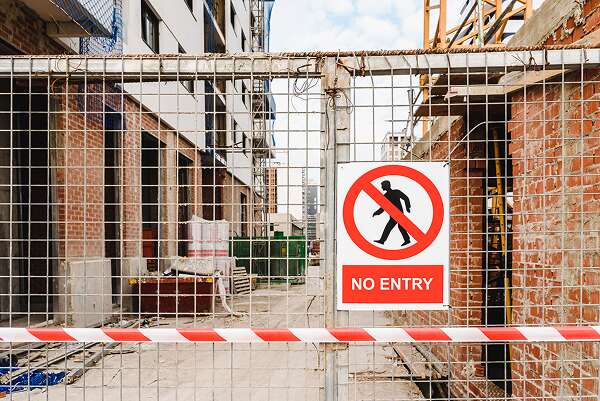
Plant and equipment theft costs the UK construction industry an estimated £800 million every year. That figure covers stolen excavators and telehandlers, but also generators, power tools, copper cable, and fuel.
The losses extend well beyond the value of the equipment itself. A stolen machine can halt a programme, trigger penalty clauses, and leave a contractor chasing a replacement hire at short notice.
Most contractors assume their insurance covers them. Many are wrong, not because they have no cover, but because the cover they have does not stretch as far as they think. There are sublimits buried in policy schedules, hired-in plant liabilities that catch contractors off-guard, and transit gaps that leave equipment unprotected between contracts.
This article looks at what is actually being stolen, where the most common coverage gaps sit, what insurers now expect from sites, and what to do if theft happens on your watch.
The scale of the problem
Plant theft has become more organised and more damaging. Where opportunist theft was once the dominant pattern, criminal gangs now operate with low-loaders, signal-jamming devices, and established export routes to Eastern Europe and the Middle East.
Equipment can be loaded and moved within minutes of a site going unmanned.
Urban regeneration zones are the most targeted locations, sites in London, Manchester, and Birmingham face a higher frequency of theft than rural projects, partly because of the volume of high-value plant on site and partly because urban sites are rarely monitored around the clock.
Around 60% of construction site thefts occur overnight or at weekends when sites are empty. The most attractive window for thieves is from Friday evening to Monday morning, when a theft may not be discovered until the working week resumes.
Fuel theft has grown alongside plant theft.
As HVO (hydrotreated vegetable oil) replaces red diesel on many sites, it has become a high-value target in its own right. Catalytic converters on plant machinery are also being stripped with increasing frequency.
What thieves are actually targeting
Large plant
Mini-diggers and compact excavators are among the most commonly stolen items on UK construction sites. A mid-size excavator can be worth £50,000 or more, is straightforward to load onto a low-loader, and commands strong prices in unregulated secondary markets overseas.
Other frequently targeted items include:
- Telehandlers and rough-terrain forklifts
- Compact dumpers and site dumpers
- Skid-steer loaders and micro-excavators
- Towed compressors and generators
The combination of high value, relatively simple theft logistics, and a ready export market makes large plant an attractive target for organised groups rather than opportunist thieves.
Small plant and tools
High-frequency theft involves smaller equipment that is easier to remove quickly and harder to trace. This includes:
- Portable generators and compressors
- Power tools from vans parked overnight: drills, grinders, saws, nail guns
- Copper cable and metal fittings
- HVO and red diesel from site tanks
- Battery packs and charging equipment
Tool theft from vans is one of the highest-volume claim types in construction insurance. A single overnight break-in can cost a sole trader or small contractor thousands of pounds in lost tools, plus the knock-on impact of being unable to work the following day.
Where your insurance may not cover you
This is where most contractors discover the gap, usually after a theft has occurred.
CAR sublimits on plant
A contractors’ all risks policy typically covers contract works, public liability, and. in many cases, some element of plant and equipment. The problem is the sublimit.
Most CAR policies include a plant sublimit, which caps the amount the insurer will pay for plant losses. That limit might be £10,000 or £25,000 per item or in aggregate. If you have a £60,000 excavator on site, a £25,000 sublimit leaves you £35,000 short before you have even considered your excess.
Contractors routinely mistake “I have CAR cover” for “all my plant is covered at full replacement value.” These are not the same thing.
Before your next project starts, pull out your policy schedule and look specifically for the plant or plant and equipment sublimit. If the figure is materially lower than the value of equipment you typically have on site, it needs to be addressed.
Contract works insurance and CAR policies are explained in more detail in our guide to CAR vs contract works cover, it is worth reading if you are unsure which policy type applies to your projects.
Hired-in plant: who is actually liable?
This is the single most common misconception in construction plant theft insurance.
When you hire an excavator, telehandler, or any other piece of equipment, the hire company’s insurance does not protect you. Standard hire contracts transfer liability for loss or damage to the hirer from the moment the equipment leaves the hire yard. If it is stolen from your site, you are responsible for the replacement cost.
Consider this scenario: a £45,000 telehandler is stolen from site on a Saturday night. The contractor has a CAR policy with a £10,000 plant sublimit. There is no hired-in plant cover on the policy. The hire company invoices for the replacement machine. The contractor is personally exposed for £35,000.
Hired-in plant cover, sometimes referred to as contingent hired-in plant cover, is a separate section that must be added explicitly to your policy. It is not automatically included in a standard CAR or contractors combined insurance policy.
If you regularly hire equipment, check whether your policy includes this section and whether the limit reflects the value of equipment you take on hire at any one time.
Transit and off-site gaps
A site-specific CAR policy covers plant while it is on the declared project site. It does not automatically cover plant in transit between sites, in a contractor’s yard between contracts, or at temporary storage locations.
This is where a standalone plant and equipment policy earns its place. Unlike a project-specific CAR, a standalone plant policy follows the equipment, covering it at multiple locations, during transit, and during periods when it is not attached to an active contract.
If you run plant across several sites or hold equipment in a yard between projects, speak to a specialist about whether a contractors insurance arrangement with a dedicated plant section better fits your risk profile than a project-by-project CAR.
What insurers now expect from sites
Insurers are tightening underwriting criteria for plant and equipment cover. The days of broad cover with minimal security requirements are largely over. If your site does not meet basic security standards, cover may be conditional, more expensive, or declined at renewal.
The measures insurers look for most often include:
- CESAR registration: the Construction Equipment Security and Registration scheme marks plant with a unique identifier that significantly improves recovery rates. Some insurers require CESAR registration as a condition of cover, or offer a premium reduction for registered equipment.
- GPS tracking: systems from providers such as PAL Equipment and PlantWatch allow real-time location tracking. However, organised thieves increasingly use signal jammers before moving equipment, so GPS alone is not considered a sufficient standalone measure.
- Immobilisers and ghost keys: secondary immobilisation systems that prevent plant being started without a secondary code or device.
- Physical security: wheel clamps, fuel lock caps, cab locks, and perimeter fencing with adequate lighting.
- Site management procedures: equipment sign-in/sign-out logs, a plant manifest updated at least weekly, and a policy of securing all plant in a locked compound overnight rather than leaving it scattered across site.
If you are unsure whether your current arrangements meet insurer requirements, a specialist construction broker can review your setup before your next renewal.
If plant is stolen from your site: what to do
Acting quickly and correctly in the hours after a theft can make the difference between a straightforward claim and a disputed one.
- Call the police immediately. Obtain a crime reference number. Virtually all insurers require this as a condition of any plant theft claim. Without it, your claim may be declined regardless of your cover.
- Notify your broker or insurer as soon as possible. Do not wait until you have assessed the full project impact. Policies require prompt notification, and delay can complicate the claims process.
- Gather your documentation. This includes photographs of where the plant was located, CCTV footage if available, serial numbers, purchase invoices or hire agreements, and any plant manifests or site records.
- Register the theft with the National Plant and Equipment Register (NPER). If the equipment is CESAR-marked, this improves the chances of it being identified if recovered.
- Arrange replacement cover. If the stolen plant was hired in, notify the hire company immediately. Your hired-in plant cover, if in place, should respond to the hire liability.
A theft claim will typically affect your claims history at renewal. A specialist construction insurance broker can help you manage the renewal conversation and present the claim in the best possible context.
Making sure your plant cover is actually fit for purpose
Plant theft is not a remote risk for most UK construction businesses, it is a frequent, costly, and increasingly well-organised problem. The financial exposure goes well beyond the value of the equipment itself when you factor in programme delays, hire replacement costs, and potential liability under hire contracts.
Three things are worth checking before your next project starts:
- The plant sublimit on your CAR or contract works policy, does it reflect the actual value of plant you have on site?
- Whether your policy includes hired-in plant cover, and if so, whether the limit is sufficient for the equipment you take on hire.
- Whether your cover extends to plant in transit or held in your yard between contracts.
If the answer to any of those questions is uncertain, it is worth a conversation with a specialist before you find out the answer at claim stage. Construction Insure has over 30 years of experience arranging cover for contractors, subcontractors, and developers across the UK. Get in touch for a review of your current liability insurance and plant cover arrangements, or get a quote online.
Frequently asked questions
Does contractors’ all risks insurance cover plant theft?
It can, but most CAR policies include a plant sublimit that may be significantly lower than the value of equipment on site. Check your policy schedule for the specific plant limit and consider a standalone plant and equipment policy if you carry high-value plant across multiple projects.
Am I responsible if hired-in plant is stolen from my site?
Yes, in almost all cases. Standard hire contracts make the hirer liable for loss or damage from the moment equipment leaves the hire yard. The hire company’s insurance does not cover you. Hired-in plant cover must be added explicitly to your policy.
Does my van insurance cover tools stolen overnight?
Standard motor policies rarely cover tools stored in a vehicle. Tools and equipment cover is a separate product and is worth arranging if you routinely carry high-value tools in a van or on site.
Will CESAR registration affect my insurance premium?
Many insurers view CESAR registration favourably. Some require it as a condition of cover; others offer a premium reduction for registered equipment. CESAR-marked plant also has a higher rate of recovery when stolen, which benefits both contractor and insurer.
What is the first thing I should do if plant is stolen from my site?
Report the theft to the police and obtain a crime reference number, most insurers require this as a condition of claim. Then notify your broker or insurer promptly and gather all relevant documentation, including serial numbers, purchase records, and any site CCTV footage.