
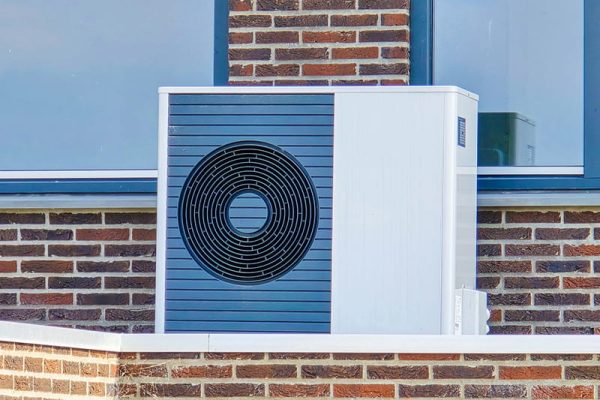
In October 2025, a homeowner went public on the Renewable Heating Hub forum with a £22,000 heat pump dispute against their installer. The system showed a 34% radiator shortfall, an 8 to 10°C loss across the buffer tank, and over £2,000 in extra electricity bills across two winters. The installer stopped replying. The homeowner ran a Section 75 claim through their credit card provider and threatened to escalate to the Financial Ombudsman Service.
Cases like this are no longer rare. The UK installed over 60,000 certified heat pumps in 2025, a 34% jump on the year before, and complaints have grown with the volumes. When a customer escalates, the question every installer should be asking is simple: who actually pays?
This article is about heat pump installer insurance and the gaps that catch installers out. Most trades policies were not written for the work installers are doing now. The MCS minimum cover is a starting point, not a safety net. And the way homeowners now complain has changed in ways that put more financial pressure on the installer than ever before.
How heat pump work changed from plumbing to professional services
Five years ago, fitting an air source heat pump was a niche bolt on to a plumbing or gas business. That has shifted.
MCS recorded over 60,000 certified heat pump installations in 2025, a 34% rise on 2024. By mid-2025 there were 5,471 certified MCS contractors, of which 2,153 were actively completing heat pump installations. Air source units made up 99% of retrofit installs last year. The Boiler Upgrade Scheme is now funded through to March 2028, with around £295 million confirmed and grants of £7,500 for air source and ground source systems.
What this growth has done, quietly, is move installers across a line.
When you sign a heat loss calculation, you are doing design work. When you size emitters, specify a buffer or set up the controls, you are taking professional responsibility for how the system performs. That is not the same as fitting a boiler. It is closer to the work a consulting engineer does.
This matters for one reason. The insurance product that responds to physical injury or damage is not the one that responds to a system that fails to perform. Two different policies, two different triggers. Most installers are paying for one and assuming it covers both.
The four claim triggers driving heat pump disputes in 2026
The claims pattern is becoming predictable. From forum cases, MCS audit data, and the way complaints are being escalated, four issues come up again and again.
Heat loss calculation and sizing errors

This is the single biggest source of claims. An undersized system cannot hold temperature in cold weather. An oversized system cycles, runs up bills and breaches the homeowner’s expected efficiency. In the £22,000 case above, the radiators were sized using inflated 2022 manufacturer output figures rather than the corrected 2023 to 2025 figures. The system was always going to underperform.
Heat loss calculation is design. Errors here trigger professional indemnity claims, not public liability claims.
Hydraulic and commissioning failures
Buffer tanks that drop temperature, low loss headers fitted where they were not needed, poor commissioning data, system controls left at default. None of these show up as a leak or damage. They show up as a cold house and a high bill.
The handover certificate is often the key document. If the certificate says one thing and the system does another, the installer is on the wrong side of that gap.
MCS 020a noise and planning breaches
Heat pump noise complaints have started reaching civil courts. Outdoor units sited too close to a boundary, calculations that did not account for reflective surfaces, or local authority measurements that contradict the installer’s MCS 020a worksheet. Expert surveyors are now being instructed by neighbours to challenge installer calculations.
The GPDO 2025 Amendment widened heat pump permitted development rights but also gave neighbours a clearer route to challenge installs that breach MCS 020a.
MCS audit and BUS grant exposure
Ofgem reserves the right to audit Boiler Upgrade Scheme installations. Where an installation is found ineligible after the voucher has been paid, the homeowner’s contract is with the installer, not Ofgem. The £7,500 grant exposure lands at the installer’s door, along with any remedial work and consequential losses.
MCS audits running alongside Ofgem audits can suspend certification while issues are resolved, which adds reputational and cash flow pressure.
Why a standard trades policy leaves heat pump installers exposed
Most installers hold a package policy bought from a trades comparison site or a renewables specialist. These usually include public liability, employers’ liability if they have staff, and sometimes tools cover.
The piece that gets missed, or capped at a level that does not match the work, is professional indemnity.
Public liability responds to physical injury to a third party, or damage to their property. If you drop a tool through someone’s window, that is public liability. A homeowner suing because their heating system does not work is not public liability. It is a financial loss claim, and it sits with legal indemnity insurance realm. The two policies are often confused but they do very different jobs.
The MCS minimum is £2 million public liability and £250,000 professional indemnity for those involved in design activities, with employers’ liability where you have staff. Those are entry requirements for the scheme, not insurance recommendations. The £250,000 figure was set when heat pumps were smaller, cheaper and rarer.
Today’s installs cost £15,000 to £25,000, attract a £7,500 grant, and produce disputes that can easily settle north of £30,000 once redesign, remedial work, grant exposure and legal costs are added together.
There is another wrinkle. Professional indemnity works on a claims made basis. The policy that responds is the one in force when the claim is notified, not the one in force when the work was done. Lapse your cover and the policy you used to hold cannot help you. This catches retiring installers and anyone who switches insurer without putting run off cover in place.
The escalation routes homeowners are using right now
This is what has changed most in the last two years. Homeowners have learnt the system.
When something goes wrong, a typical 2026 complaint runs along these tracks:
- A direct complaint to the installer
- A complaint to the Consumer Code (RECC or HIES). These bodies can award compensation, require remedial work, or in serious cases require a full refund
- A Section 75 claim through the credit card provider, where the customer paid by card or finance. The card provider becomes jointly liable and then pursues the installer for recovery
- A complaint to MCS. MCS has confirmed it is not accredited to perform dispute resolution, so this rarely produces money but can suspend certification
- Escalation to the Financial Ombudsman Service after the card provider’s decision
- A civil claim under the Consumer Rights Act 2015, citing services not provided with reasonable care and skill
Every one of these routes can result in money being demanded from the installer. The Consumer Code can mandate it. Section 75 can recover it through the card provider. A civil court can order it. Public liability does not respond to any of these. Heat pump installer insurance only works when professional indemnity is set at the right level and written for the right work.
The umbrella scheme trap
Umbrella schemes are popular for a reason. They let a smaller installer carry out MCS certified work and access BUS grants without the cost and admin of full direct certification.
The misunderstanding is that the umbrella operator’s cover protects the subcontractor. It does not.
MCS 001-1 clause 4.11 requires umbrella scheme operators to have a formal written agreement with subcontractors, to ensure subcontractors are demonstrably competent, and to ensure they hold appropriate insurance of their own. Subcontractors who think they are covered under the operator’s certification are usually wrong. The operator’s PI protects the operator, not the people doing the work.
For umbrella operators, the picture is different but no easier. The operator is contractually responsible to the homeowner for the full scope of work, across every job done in their name. Three failed audits in a quarter can produce an aggregated claim exposure of £45,000 or more, plus the cost of MCS recertification if certification is suspended. Few operators price their PI for that scale of concentrated risk.
If you are a bona fide subcontractor working under an umbrella, your own cover still matters.
Propane (R290) and the next exposure shift
Propane heat pumps (R290) are the fastest growing segment of the market. Aira opened a 1,300 square metre R290 training academy in Crayford in 2024 with the stated aim of training 8,000 UK installers over a decade. Daikin, Mitsubishi, Vaillant and Grant all have R290 ranges.
R290 currently sits outside the F-Gas Regulations because propane is a hydrocarbon. There is no UK certification scheme dedicated to it yet. From the start of 2027, EU rules will require stationary split heat pumps below 12kW to use refrigerants with a global warming potential below 150, and the UK is expected to follow.
For installers, switching from R32 to R290 is not just a product choice. R290 brings flammable refrigerant handling, BS 7671 electrical zoning around the unit, and design considerations that a standard ASHP policy may not have been priced for. Treat a switch to propane as a conversation with your broker, not just a stock change.
How much heat pump installer insurance do you actually need?
There is no single answer, but there are sensible ranges.
For a sole trader doing five to twenty heat pumps a year, a working range is:
- £2 million public liability (above the MCS minimum, because building sites and customer homes carry real injury risk)
- £500,000 to £1 million professional indemnity, with design and specification clearly included
- Employers’ liability if you have staff or use labour only subcontractors
- Run off cover when you cease trading, typically for six years
- Tools and plant cover where relevant
For umbrella operators and firms moving into new build work under FHS 2027, the limits need to go higher. Main contractor and developer contracts often require £2 million to £5 million PI, and JCT contracts can specify their own limits. Contractors’ all risks cover for the works in progress also comes into play once you are working alongside other trades on a live site.
The £250,000 MCS minimum protects the scheme. It does not protect your business from a single bad job that ends up in front of the Financial Ombudsman.
Where this leaves UK heat pump installers
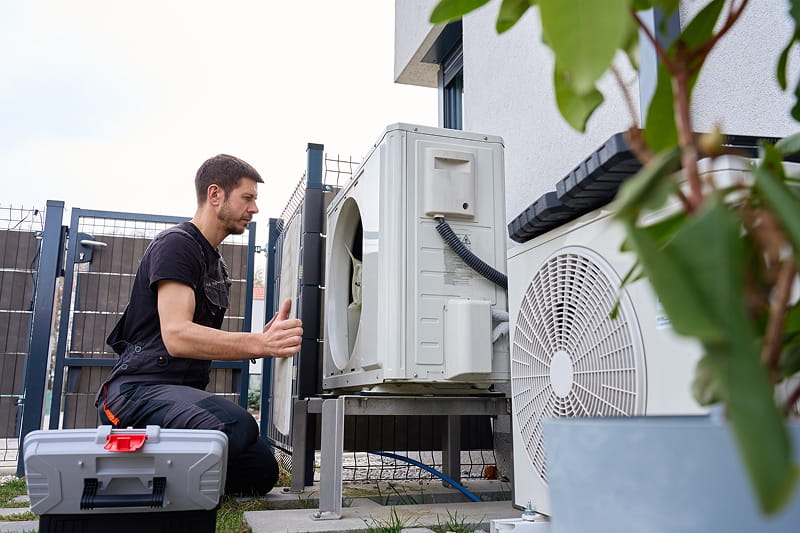
The market is growing faster than the regulatory and insurance frameworks around it. In 2026, installers are doing genuine professional services work, signing design certificates, managing grant funded jobs and carrying contractual responsibility for system performance over years, not weeks.
Three things to take away.
First, the MCS minimums are a regulatory floor. They were designed to keep bad actors out of the scheme, not to make sure the average installer can survive a serious claim.
Second, the way homeowners complain has changed. Section 75 routes, Consumer Code awards and ombudsman findings all bypass the installer’s complaints process and land as financial demands. Only professional indemnity responds across the board.
Third, the umbrella scheme trap and the shift to R290 are both creating new exposures. Subcontractors under umbrellas need their own cover. Operators need higher limits than they think. Installers moving to propane need to talk to their broker before the first job.
Heat pump installer insurance is now one of the most important decisions on the business side of the trade. A specialist construction broker can build cover around the work you actually do, rather than the work the comparison sites assume you do. If you would like to talk it through, our team at Construction Insure handles installer cover every month, and a tailored quote takes minutes rather than hours.