
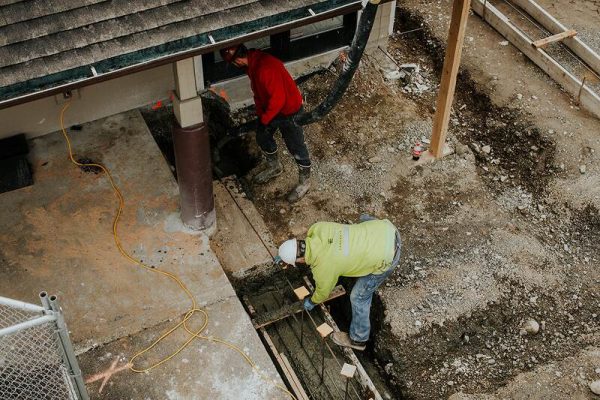
You finish the project on time. The finish is good, the price is right, and an offer comes in within a fortnight. Then the buyer rings their insurer, mentions that the foundations were underpinned during the build, and the quote never arrives. Their lender will not release funds without buildings cover. The sale stalls, then dies.
This happens more often than most developers expect, and it rarely has anything to do with the quality of the work. Underpinning creates a permanent mark on a property’s record. Insurers see the word and price for the worst case. Lenders follow the insurers. Buyers walk away.
The good news is that this is a paperwork problem far more than a structural one. Developers who plan for it at design stage sell without trouble. Developers who find out at the point of sale spend months trying to fix something that should have been sorted before the first spade went in the ground. This guide explains why insurance for underpinned houses is so hard to arrange, what your legal duty to disclose actually covers, and what you need in place before you list.
What “Underpinned” Means to an Insurer
Underpinning is the process of strengthening or deepening existing foundations. On a development, it usually happens for one of two reasons.
The first is subsidence remediation. The ground under the building has moved, cracks have appeared, and the foundations need stabilising.
The second is load. You are digging out a basement, adding a wraparound extension, or converting a bungalow into a two storey house. The existing footings cannot carry the new weight, so building control requires the foundations to be extended or deepened.
Those two situations are structurally very different. One is fixing damage. The other is normal engineering on a bigger build, closer to routine groundworks insurance territory than a defect.
Insurers frequently treat them the same. Once foundations have been underpinned, the property gets labelled a Previously Underpinned Property, or PUP, in the household insurance market. The label does not usually distinguish between remediation and load enhancement, which is where developers get caught out.
Why Mainstream Insurers Refuse to Quote
Household insurers use underpinning as a shorthand for ground movement risk. Their logic is simple: if the foundations needed work once, the ground may move again.
The result for buyers is one of three outcomes. Some insurers decline to quote at all. Some quote with a subsidence exclusion, which the lender will then reject. Some quote with a premium two or three times the standard rate and a subsidence excess of £1,000 or more.
Buyers report this constantly. On one property forum, a purchaser described how their existing insurer refused to insure the property and would not even offer a quote, with building insurance quotes coming in at around £1,000 and a large excess for any subsidence work. This was for a property where the work had been designed by a chartered engineer and signed off by building control.
Specialist insurers do exist and will look at these cases individually. But that market is narrow, and it prices for uncertainty. The less documentation a buyer can produce, the higher the loading.
Market conditions are not helping. Domestic subsidence payouts hit £307 million in 2025, up 10% year on year and the highest level on Association of British Insurers records, driven by the hottest UK summer on record. In the first half of 2025 alone, insurers supported almost 9,000 households through subsidence damage, with an average payout of £17,263 per claim. Rising claims tighten underwriting across the board, which makes insurance for underpinned houses harder to place with every warm summer.
How This Kills the Buyer’s Mortgage
No lender will complete without buildings insurance in place. That single condition is what turns an insurance problem into a sale problem.
Lenders also apply their own rules on top. Some high street names decline underpinned properties outright if the work was carried out in the last ten years. Others will consider the property but demand a structural engineer’s report, evidence that the work was signed off, and proof that cover has been continuously available since.
Nationwide, for example, will lend on properties underpinned within the last decade only where the work formed part of an insurance claim and the correct guarantees are in place. That criterion is a problem for developers, because underpinning done for load reasons is not an insurance claim. It never was. There is no loss adjuster, no claim reference, and no insurer-backed guarantee at the end of it.
This is the gap most developers do not see coming.
You Must Disclose It, Even If It Was Never About Subsidence
There is no discretion here. Sellers in England and Wales complete the TA6 Property Information Form, and the guarantees and warranties section asks about works such as underpinning and whether any claims have been made under those guarantees, while the insurance section covers buildings insurance and claims history.
The form asks about the work, not the reason for it. Underpinning carried out to support a new steel is still underpinning.
Attempting to hide this information constitutes misrepresentation and could result in legal action from buyers if they suffer losses as a result. For a developer selling multiple units, that exposure multiplies.
The question is not whether to disclose. It is whether your disclosure arrives with a folder of documents that reassures the buyer, or arrives naked and sinks the deal.
The Documents That Save the Sale
Buyers, their solicitors and their lenders all want the same evidence. Assemble it before you list, not after an offer comes in.
- Certificate of Structural Adequacy, issued by a Chartered Member of the Institution of Structural Engineers. This is the document lenders and insurers ask for by name.
- Building control sign-off for the underpinning. Underpinning is notifiable building work and requires approval.
- The structural engineer’s design and calculations, showing what was done and why.
- Ground investigation and soil reports, particularly on clay soils.
- The contractor’s insurance details and any insurance-backed guarantee on the work itself.
- A structural warranty on the completed property, running 10 or 12 years from practical completion.
Where documentation cannot be recovered, specialist indemnity insurance may be the only route to enable a sale, though lender acceptance is not guaranteed. That is a salvage option, not a plan.
Where Structural Warranty and Latent Defects Cover Fit In
A latent defects insurance policy covers hidden structural failures that appear after handover. Load bearing foundations and footings sit squarely within the covered elements on most policies.
Two features matter for an underpinned sale.
First, the policy responds without the claimant needing to prove fault. A buyer with a structural warranty does not have to sue anyone. They claim on the policy. That is a far easier story for their solicitor to accept than a contractor’s guarantee.
Second, the cover survives your contractor. If the groundworks firm that did the underpinning folds in three years, the warranty still stands. A contractor’s guarantee does not.
Most lenders require a recognised warranty on any property under ten years old. On an underpinned property, it moves from advisable to essential. Our warranty checklist sets out what needs registering and when.
The timing is what catches people out. Building warranties have to be registered before or during construction, with technical inspections built into the build programme. You cannot arrange one retrospectively on normal terms, and retrospective policies cost considerably more where they are available at all.
What to Do Before Practical Completion
Sorting insurance for underpinned houses is far cheaper at design stage than at sale stage. Six actions cover most of it.
- Register the structural warranty before ground works begin. Inspections need to happen while foundations are open.
- Instruct a chartered structural engineer to design the underpinning, and confirm they will issue a Certificate of Structural Adequacy on completion.
- Check your contractor’s cover. Underpinning firms need appropriate contractors all risk and liability limits for foundation work. Many general builders do not carry enough.
- Make sure your project cover reflects the work. Contract works insurance needs to be declared correctly where structural and groundworks are involved. Non-disclosure here creates a claims problem on top of a sales problem.
- Keep one document file from day one. Scanned, dated, indexed.
- Brief your agent. They will field the question, and a confident answer with documents attached is worth more than an evasive one.
Developers running refurbishment projects should check that their renovation insurance and property developers insurance arrangements cover structural alterations rather than cosmetic works only.
Get the Paperwork Right and Underpinning Stops Being a Problem
Underpinning does not make a property unsellable. Missing paperwork does.
The developers who struggle are the ones who treated underpinning as a construction detail rather than a sales issue, and only discovered the difference when a buyer’s insurer said no. The ones who sell smoothly registered a warranty before breaking ground, kept every certificate, and handed the buyer a folder that answered the questions before they were asked.
Arranging insurance for underpinned houses on the buyer side is not your job. Making it possible is. If you have a project involving underpinning, basement excavation or significant foundation work, speak to a broker before the design is finalised rather than after completion. Get a quote or call the team to talk through what your project needs.