

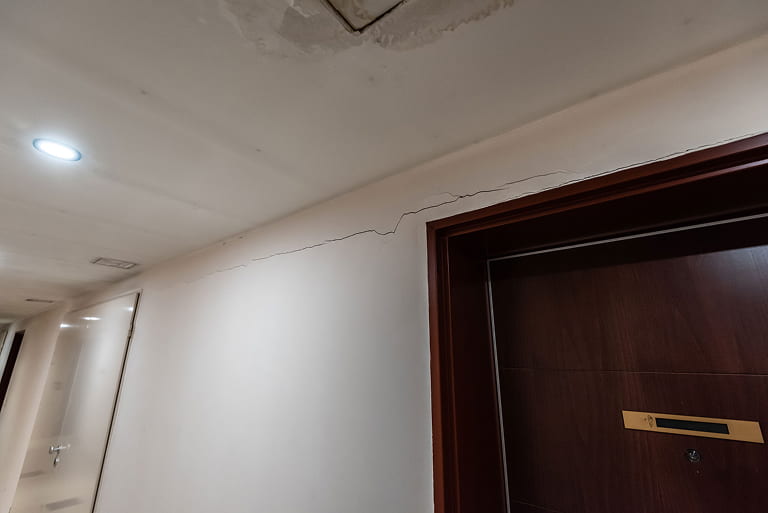
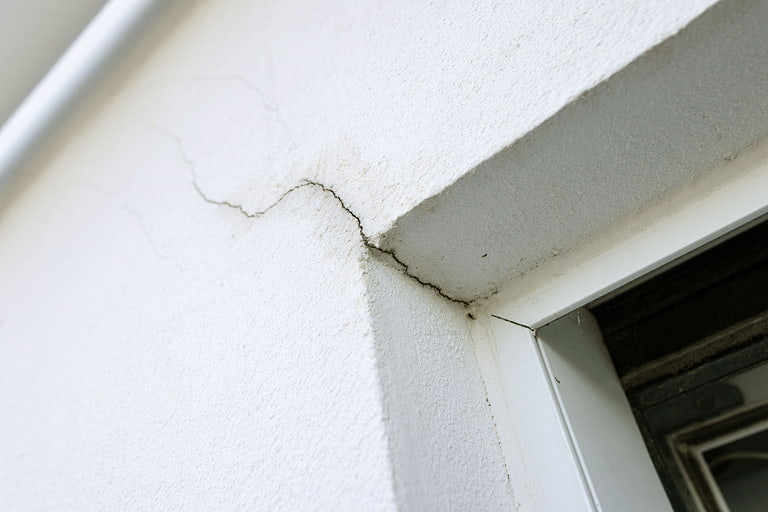
The job is signed off. The snagging list is cleared, the final invoice is paid and the team has moved on to the next site. Then, four years later, the phone rings. There is damp coming through a basement wall, or cracks are spreading across an external elevation.
This is how a latent defect usually shows itself. It sits hidden inside the structure for months or years, then surfaces long after everyone has forgotten the project. The liability can follow a contractor for far longer than most people expect.
The problem is becoming more visible. Formal complaints to the New Homes Ombudsman Service rose by 204% in a year, from 593 in 2024/25 to 1,802 in 2025/26, with defects and snagging the most common issues raised.
This guide explains what counts as a latent defect in plain terms. It covers real examples from UK builds, how a latent defect differs from a snag, and who is liable once one comes to light. It also looks at how recent changes in the law have stretched the liability window for builders, contractors and developers.
What Is a Latent Defect in Plain Terms?
A latent defect is a fault in the design, materials or workmanship of a building that existed at completion but could not be found through a reasonable inspection at the time. It is sometimes called an inherent defect.
The opposite is a patent defect. This is a fault that is visible, or should have been visible, to a competent person checking the work.
There is no single legal definition of a latent defect in UK law. The term is used in contracts, warranties and insurance policies, and courts decide each case on its facts. In practice, two tests are applied.
The Two-Part Test
For a fault to count as a latent defect, both of these must be true:
- It was present at practical completion. The flaw was built in, rather than caused later by wear, poor maintenance or damage.
- It could not have been found by a reasonable inspection. A competent person looking at the finished work would not have spotted it.
If either test fails, the fault is treated differently. A problem caused by a homeowner drilling through a damp-proof membrane five years later is not a latent defect. Neither is a cracked tile that was visible on handover day.
Why “Nobody Noticed” Is Not Enough
A common mistake is to assume that any fault nobody spotted must be latent. That is not how it works.
The question is whether a reasonable inspection should have found it, not whether one actually did. If an inspector walked past an obvious problem, it is likely to be treated as a patent defect. That can change who carries the blame and which contract terms apply.
This is one reason thorough sign-off inspections matter. They create a record of what was, and was not, visible at completion.
 Real Examples of Latent Defects on UK Builds
Most latent defects are structural or affect the building envelope. They tend to be buried behind finishes, under floors or inside walls.
Structural and Groundwork Defects
- Inadequate foundations that lead to subsidence years later
- Concrete below the specified strength, or reinforcement placed in the wrong position
- Missing or poorly fixed wall ties and wind posts, causing walls to move
- Errors in structural calculations that only show once the building is loaded and in use
Damp, Envelope and Fire Safety Defects
- Failed basement tanking that lets water in after heavy rain
- Missing or wrongly fitted weep vents, trapping moisture inside cavity walls
- Missing cavity wall insulation
- Poorly installed fire stopping or fire safety equipment
The last two appear in the New Homes Ombudsman’s latest annual report, alongside more minor issues such as poorly fitted tiles and defective plaster. Both are good examples of work that looks fine once it is covered up.
How a Latent Defect Differs From a Snag
Snags are small, visible faults picked up at or shortly after handover. Think paint runs, sticking doors, loose handles or gaps in sealant. They are frustrating but routine.
They are also extremely common. The Home Builders Federation’s 2025 customer survey found that 93.7% of new build buyers reported snags or defects to their builder after moving in, and 26.2% reported more than 15.
A latent defect is a different category altogether. It is hidden, often serious and usually far more expensive to put right.
Snags, Patent Defects and Latent Defects Compared
| Type | Visible at handover | Typical examples | When it is usually dealt with |
| Snag | Yes | Paint finishes, sticking doors, loose fittings | On the snagging list at or soon after handover |
| Patent defect | Yes, or should be | Badly laid brickwork, visibly uneven floors | Before practical completion is certified |
| Latent defect | No | Failed tanking, missing wall ties, weak foundations | Often years later, through a claim |
What the Rectification Period Actually Covers
Most JCT contracts include a rectification period, previously called the defects liability period. It usually runs for 12 months from practical completion. Under the JCT Minor Works contract, it is three months unless the parties agree otherwise. Residential contracts often extend it to two years.
The rectification period is not there to clear handover snags. Its purpose is to let the client call the contractor back to fix defects that appear after completion.
Once it ends, the client loses the contractual right to make the contractor return. That does not end the contractor’s liability. A latent defect found in year five can still lead to a claim.
 Who Is Liable Once a Latent Defect Surfaces?
Liability depends on what caused the defect, what the contract says and which warranties are in place.
Contractors, Subcontractors and Designers
- Contractors are usually liable for poor workmanship on work they carried out or managed.
- Subcontractors can be pursued by the main contractor, often through back-to-back terms or collateral warranties.
- Designers and consultants are liable for errors in drawings, specifications or calculations. Design and build contractors can carry this risk too.
- Suppliers and manufacturers may be responsible for faulty materials, usually through the contract chain.
- Developers can be liable to the people who buy the finished homes.
How Long Liability Lasts
This is where many contractors are caught out. The main time limits in England and Wales are:
- Simple contract: six years from the breach, usually taken as practical completion
- Contract signed as a deed: 12 years
- Negligence claims for latent damage: six years from the damage, or three years from when it was or should have been discovered if later, with a 15-year longstop (Latent Damage Act 1986)
- Defective Premises Act 1972 claims on dwellings: 15 years for work completed on or after 28 June 2022, and 30 years for work completed before that date
The Building Safety Act 2022 brought in those Defective Premises Act changes. It also added a new duty covering work on existing dwellings, such as refurbishments, extensions and remedial work. For smaller builders, this means a loft conversion finished in 2023 could still lead to a claim in the late 2030s.
What the URS v BDW Ruling Changed
In May 2025, the Supreme Court decided URS Corporation Ltd v BDW Trading Ltd. BDW, a developer, found structural design defects in two high-rise residential blocks during checks carried out after the Grenfell Tower fire. It had already sold the buildings, but paid for the repairs and claimed the cost from URS, the structural engineer.
The court ruled that BDW could recover those costs, even though it no longer owned the buildings and no homeowner had sued it. It also confirmed that developers are owed duties under the Defective Premises Act.
For contractors and consultants, this means developers now have stronger grounds to pass latent defect costs down the chain, and for longer.
Where Warranties and Insurance Step In
Most new homes come with a 10-year structural warranty. Under the NHBC Buildmark model, the builder is responsible for putting right defects in years one and two. From year three to year ten, the warranty provider covers damage to the structure and weatherproofing caused by a defect.
Warranties have limits. Cracking caused by shrinkage or thermal movement is commonly excluded, and cosmetic issues are not covered. Financial Ombudsman decisions show that many disputes turn on whether cracking is structural or simply the building settling.
It also helps to know what other policies do not cover. Contract works insurance protects the build while it is under way, not latent defects that appear after completion. Where a contractor takes on design responsibility, professional indemnity cover becomes important.
For developers and project owners, building warranties provide the most direct protection. Our guide to latent defects insurance explains how cover works, what it costs and who usually pays for it.
Practical Steps to Limit Your Exposure
Latent defect risk cannot be removed entirely, but it can be managed.
- Photograph concealed work. Record foundations, insulation, wall ties, membranes and fire stopping before they are covered up.
- Keep project records for longer. Hold drawings, inspection reports and sign-offs for at least 15 years, and longer for residential work completed before June 2022.
- Check how contracts are signed. A deed doubles the contractual limitation period from six years to 12.
- Pass risk down the chain. Use back-to-back terms and collateral warranties with subcontractors and designers.
- Match your cover to your liability. Review your policies with a specialist broker so the cover reflects how long claims can now run.
Why Latent Defects Outlast the Handover
A latent defect is not simply a fault that was missed. It is one that was built in at completion and could not reasonably have been found at the time. That separates it from snags, which are visible, routine and fixed quickly.
The biggest difference is time. Snags are usually settled within months. A latent defect can surface years later, and the Building Safety Act has pushed liability for residential work out to 15 years, or 30 years for older projects.
Good records, clear contracts and the right insurance put builders and developers in a strong position when a hidden fault finally shows itself. To check that your cover matches your real exposure, speak to our team or get a quote today.